
The gap between legacy systems and modern guest expectations is widening into a canyon. In an era where travelers expect to manage their entire stay from a smartphone, relying on an on-premise server is a threat to your business survival.
Upgrading your system isn't just about technical convenience; it’s about institutional survival. Most operators feel the friction daily: slow performance, frequent system crashes, and a complete lack of modern integrations. These aren't just glitches; they are barriers to growth that keep your team stuck in manual data entry instead of guest service.
Before diving into the solution, we must define the alternative.
What is a Cloud PMS? Unlike traditional on-premise systems that require physical servers and expensive onsite IT maintenance, a Cloud Property Management System (PMS) lives entirely online. It acts as a web-based hub, allowing you to manage reservations, guest data, and housekeeping from any device with an internet connection, without the need for localized hardware.

The invisible costs of sticking with legacy systems are staggering. According to research on hospitality IT budgets from Hotel Technology News, legacy systems can consume up to 75% of a company’s IT budget just for basic maintenance, leaving almost nothing for innovation.
Moving to the cloud shifts your operation into a real-time environment. It provides built-in scalability for growing portfolios; adding a new unit becomes a matter of clicks, not hardware orders.
The real value, however, lies in the "connected ecosystem." A cloud-based PMS is designed with open APIs (Application Programming Interfaces) that allow it to talk to other software. This connectivity is the foundation for the integrations that actually drive revenue.

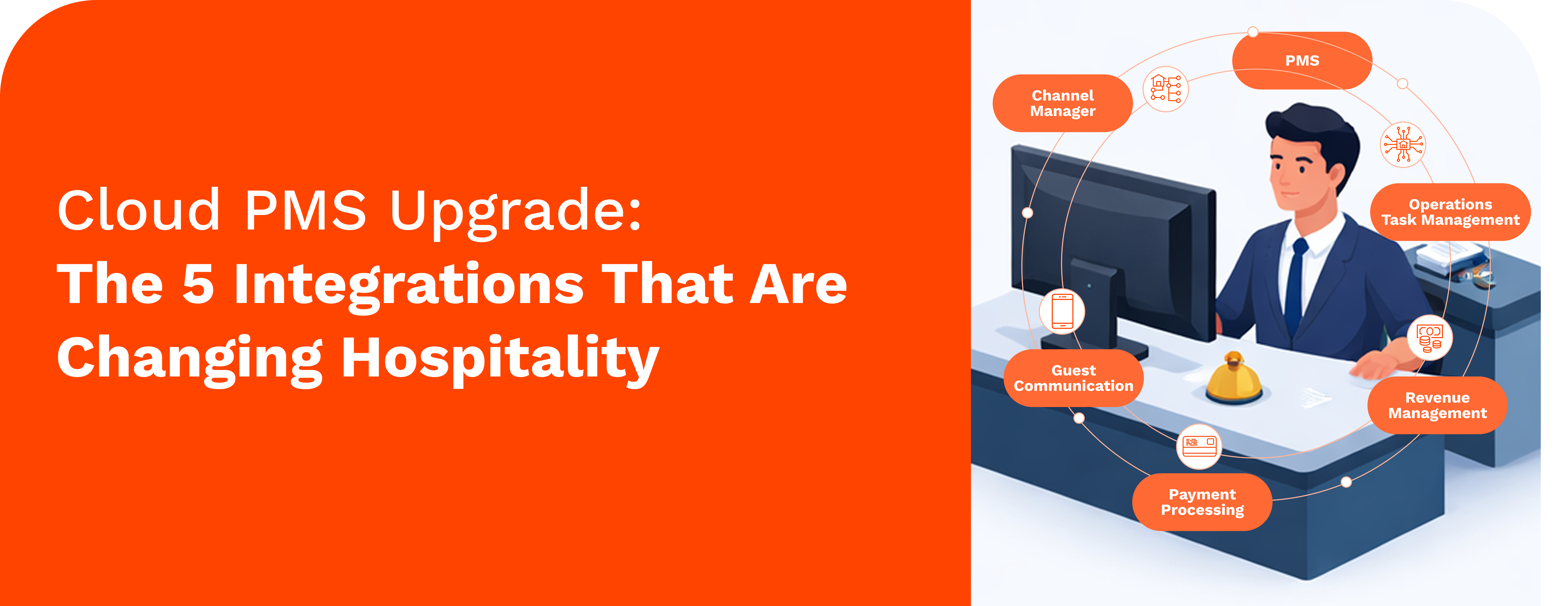
Managing inventory across Expedia, Booking.com, and Airbnb manually is a recipe for disaster. A seamless channel manager integration ensures that your rates and availability stay synced across every OTA (Online Travel Agency) simultaneously. This eliminates overbookings and allows for aggressive last-minute pricing without the fear of manual error.
Setting a flat rate for the season is a relic of the past. Modern Revenue Management Systems (RMS) analyze market demand, competitor pricing, and local events to adjust your rates multiple times a day. Automating these adjustments allows you to maximize occupancy and ADR (Average Daily Rate) without a full-time analyst monitoring the screen.
Modern guests prefer WhatsApp or SMS over a phone call to the front desk. This is where a centralized guest messaging integration becomes a strategic asset. By integrating communication platforms into your operations, every message, regardless of the channel, lands in one place.
The disconnect between the front desk and the cleaning crew is where most complaints begin. By integrating your PMS with an operations management system, you create a live feedback loop.
Manual credit card entry is a security risk and a compliance nightmare. Integrating a secure payment gateway ensures transactions are encrypted and automated. This speeds up check-in and makes monthly financial reporting a matter of seconds rather than days.
Data privacy is a trust exercise. Cloud providers invest millions in PCI DSS and GDPR compliance standards, offering security levels that a local server simply cannot match.
The most common reason operators stay with a broken system is the fear of the transition. They worry about losing historical data or facing days of downtime. However, a modern migration is far less painful than it used to be.
A smooth transition involves choosing a partner that offers a phased implementation. You map your data, train your team on a sandbox version of the software, and flip the switch during a low-occupancy window. The long-term ROI, measured in saved labor hours and increased bookings, usually offsets the migration costs within the first few months.

While many competitors offer generic software, Dharma’s Operations Platform (OPS) is built specifically for the high-intensity needs of modern hospitality. We don't just provide a tool; we provide the central nervous system for your property.
Unlike standard add-ons, Dharma OPS focuses on three core pillars that complement your cloud PMS:
Legacy systems are holding your property back. A cloud PMS upgrade provides the speed, security, and integration power needed to compete today. The sooner you move away from localized hardware, the sooner you can stop troubleshooting your tech and start focusing on your guests.
If you are still dealing with manual updates, siloed communication, and security risks, you are leaving money on the table. Upgrade your operations with an ecosystem built for the future of hospitality. Book a call with us and learn how our Operations Platform integrates to this operational upgrade!

.svg)