Housekeeping and cleanliness are the strongest drivers of guest satisfaction in hospitality. Yet housekeeping remains one of the least digitized hotel functions, as highlighted in McKinsey’s report.
This gap becomes critical during mega events like FIFA. These events are once-in-a-generation opportunities for hotels to drive revenue and strengthen reputation, but they also expose operational weaknesses that stay hidden during normal periods. This blog will help you identify where housekeeping becomes stressful and how you can solve it.
The Housekeeping Pressures You Can’t Ignore
Mega events do not create new housekeeping problems. They expose the weaknesses already embedded in everyday workflows. Under normal demand, these issues remain manageable. Under pressure, they compound quickly across floors, shifts, and teams.
Lack of coordination: Housekeeping teams often wait for room readiness updates from the front desk or maintenance. Without real-time status updates, staff stand by or start tasks without certainty. Non-value-added activities such as waiting, fetching supplies, or excessive movement already consume up to 44% of a housekeeper’s shift, roughly 211 minutes. During peak demand, this inefficiency compounds.
Untracked tasks and service requests: Tasks are managed through paper notes, radios, and verbal instructions, increasing the risk of missed requests and maintenance issues that later surface as guest complaints. Guest laundry alone takes up to 54 minutes to a room attendant’s day, any such additional requests in bulk adds to the overall delay. Additionally, tasks without clear ownership progress slowly.
Staffing Issue: Full occupancy requires hiring additional staff with efficiency of cleaning 12–16 rooms per housekeeper per shift. But new hires typically need two to three weeks to reach standard productivity. Such training delays stack on top of existing inefficiencies.
Flexible check-ins and check-outs further disrupt schedules. Even a 30–60 minute delay in departures tightens room release timelines. With standard checkout cleans taking 20–35 minutes and no recovery buffer, one delayed room can cascade into several lags.
Add multiple languages and currencies, last-minute cancellations, and constant reprioritization. Work fatigue sets in fast. By day’s end, productivity drops and morale dips.
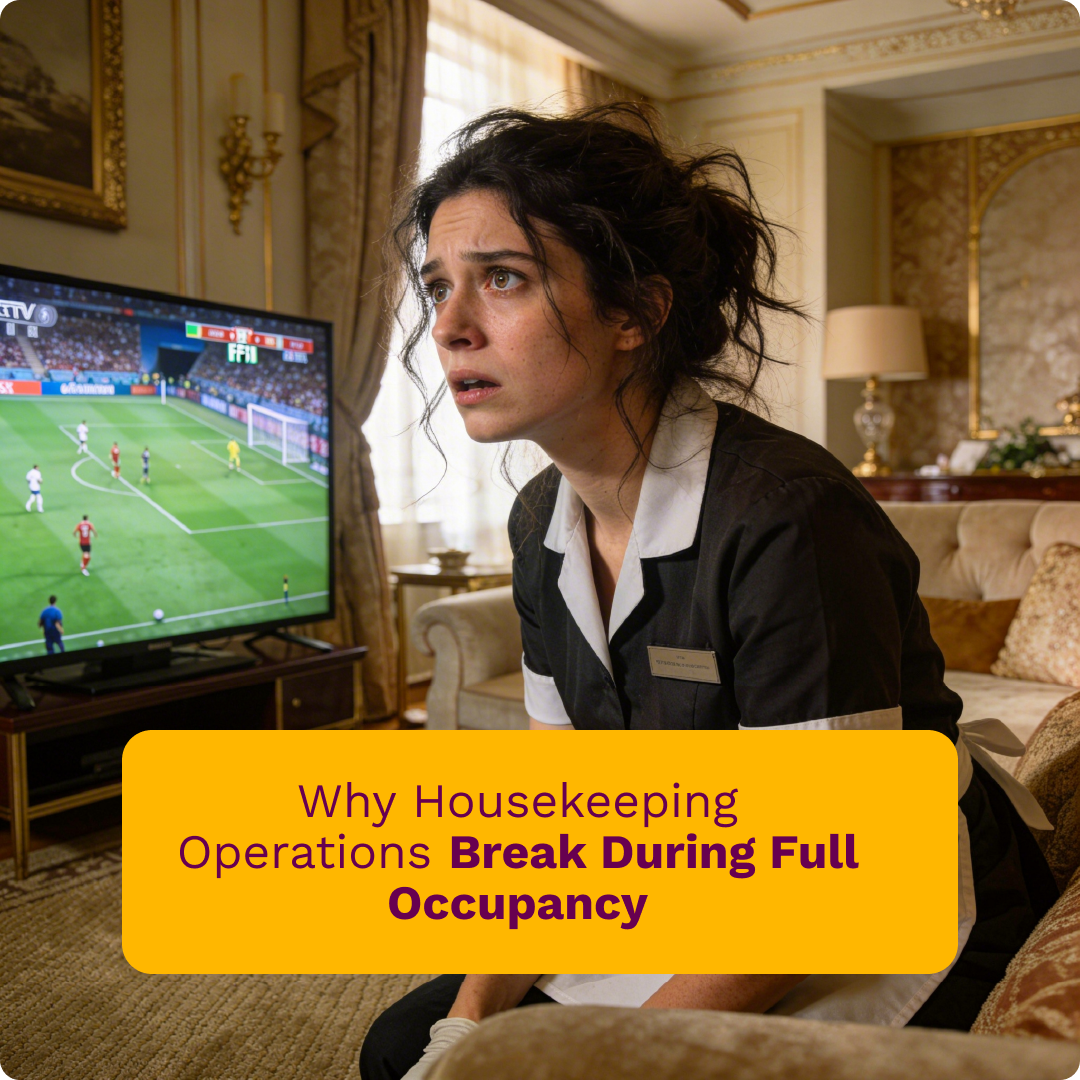
During mega events, these pressure points surface at once, making housekeeping one of the most stressed hotel functions.
Why Operations Fail During Peak Events
Mega events expose operational weaknesses not because demand is high, but because it arrives unevenly, unpredictably, and at scale. Booking windows shorten, guest behaviour shifts, and pressure concentrates into a few critical days rather than spreading across a season.
Past events show this pattern clearly. Peak room rates often appear 110 days before arrival, well before demand is certain. Final booking surges typically occur 10–14 days out, driven by ticket availability and match outcomes. Sports fans often wait for semi-final results before confirming travel, triggering sharp spikes in arrivals, cancellations, and rebookings.
Now scale this to FIFA: 5.5 million fans, 104 matches over 39 days, across three countries. Over 500 million ticket requests from 200+ countries. This means apart from the rising housekeeping needs, you will be dealing with multiple languages, currencies, and rapidly changing itineraries, all at the same time.
The Smart Fix: Housekeeping Task Management Done Right
The pressure points above are system problems. Modern housekeeping operations improve not by replacing the PMS, but by adding an operational layer that connects tasks, teams, and timing in real time. This is where tools like Dharma OPS support with these functionalities:
Centralized Task Management Dashboard: Integrated with your existing PMS, you get a single live dashboard of centralized housekeeping, maintenance, and operational tasks where:
Every task has a designated task owner and assignee, priority, and status.
Room cleans, maintenance issues, inspections, and special requests are linked directly to units and reservations, eliminating guesswork and follow-ups.
Real-time updates ensure that changes are visible instantly, reducing waiting, rework, and bottlenecks across shifts.
Features like split-screen and inline editing allow supervisors to update tasks while staying aware of overall workflow.
Mobile access lets housekeepers update room status on the go.
Data Analysis and Reporting: Performance data is captured automatically, enabling accurate tracking of completion times, workload distribution, and team efficiency. With Dharma OPS, similar insights become accessible through operational analytics and billing reports for housekeeping or contractors.
Personalized Guest Services: Add guest-facing AI, guest profiles, and housekeeping shifts from reactive firefighting to planned, personalized readiness before the guest even arrives.
Hidden Benefits Beyond Efficiency
Modern task and housekeeping systems do more than speed things up. They quietly remove pressure from teams and create stability during the most demanding periods.
Reduced stress and burnout: When tasks are clearly assigned, tracked, and updated in real time, teams stop firefighting. Seasonal and full-time staff know what to do next, what is complete, and what is still pending. This clarity lowers mental load during long shifts and high-occupancy days.
Higher Ratings: Clear task visibility also leads to fewer guest complaints. Research shows around 75% of guests consider room readiness a key factor in their stay, driving repeat bookings, stronger reviews, and long-term revenue growth.
Faster onboarding is another immediate gain. New or temporary staff can follow verified workflows instead of relying on constant supervision or verbal instructions. This shortens ramp-up time and reduces errors exactly when experienced staff are stretched thin.
Predictive Analysis: Behind the scenes, data becomes a planning tool. Automated reporting highlights productivity trends, recurring bottlenecks, and rooms or tasks that consistently slow turnaround. Managers can make data-driven decisions on staffing, training, and scheduling instead of relying on instinct during busy periods.
Revenue Growth: Cutting just 30 minutes off room turnaround can increase occupancy by up to 10% during peak demand. Over a peak month, that translates into tens of thousands in incremental revenue.
Takeaways for Hoteliers
Mega events do not break housekeeping teams. Outdated, manual processes do. Hotels that invest in task visibility, real-time updates, and clear accountability build operational resilience before pressure hits. The goal is not to rush teams, but to support them with systems that balance speed, quality, and consistency.
Curious to know how Dharma OPS can make peak demand manageable and profitable for your property?




.svg)